Related: Best Keg Kits & Kegerators: Skip the Bottle-Capping Grind Forever
Keg Vs Bottle Conditioning: Which Is Better
Forced carbonation in a corny keg finishes a batch in three days. Bottle conditioning takes three weeks. The beer comes out the same ABV. The difference is everything between the keg and the glass: time, equipment cost, oxidation risk, and how many bottles you want to scrub at midnight.
I have run both setups side by side for over 50 batches at this point, and the answer isn't as simple as "kegs are faster." Speed is one variable.
Reliability, footprint, and what happens when a batch goes sideways are three more.
The short list
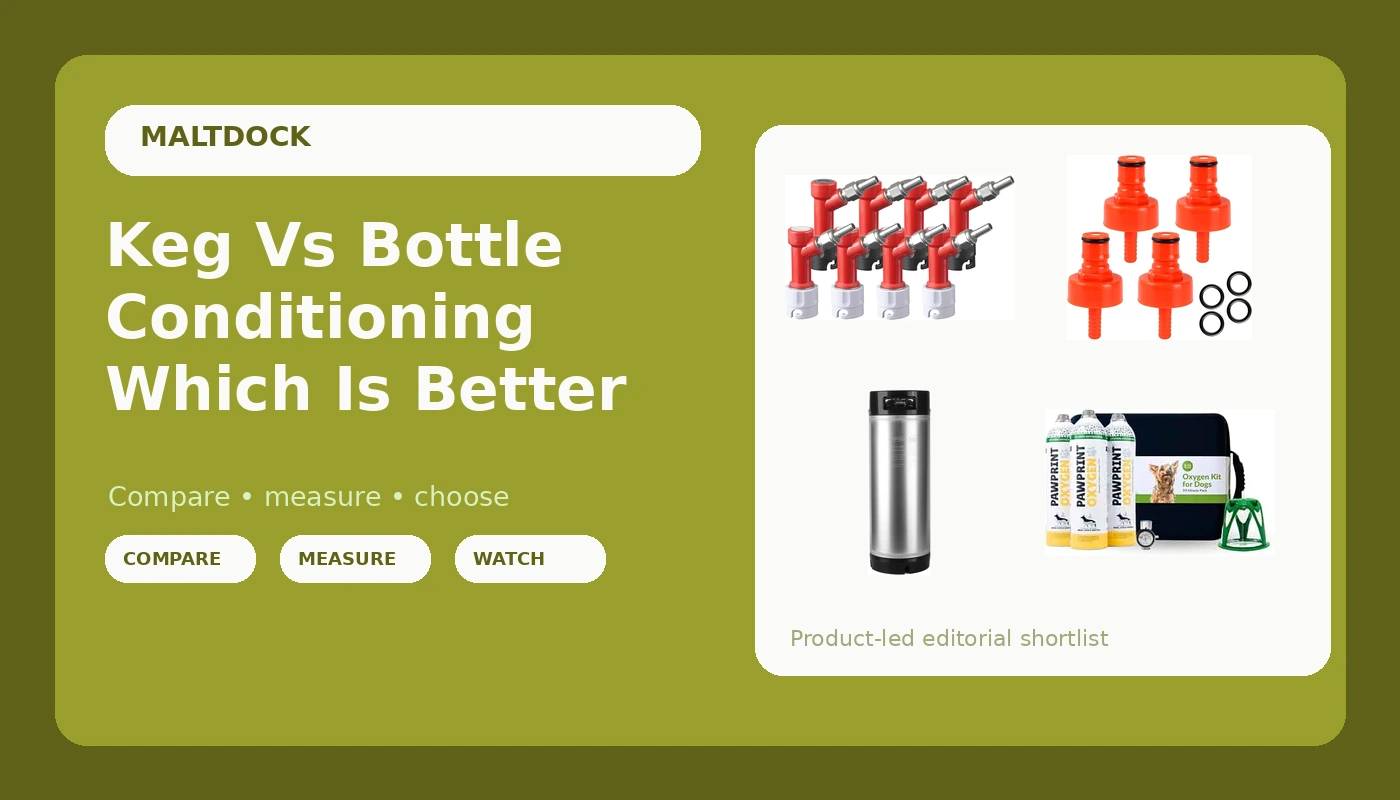
PERA 4 Pairs Corny Keg Pin Lock Quick Disconnects MFL Set with Swivel Nuts (2) 5/16 Gas, 1/4 Liquid Barbed For Homebrewing Beer Keg Kegging
Fastest path to repeatable, sediment-free pours
Visit on Amazon →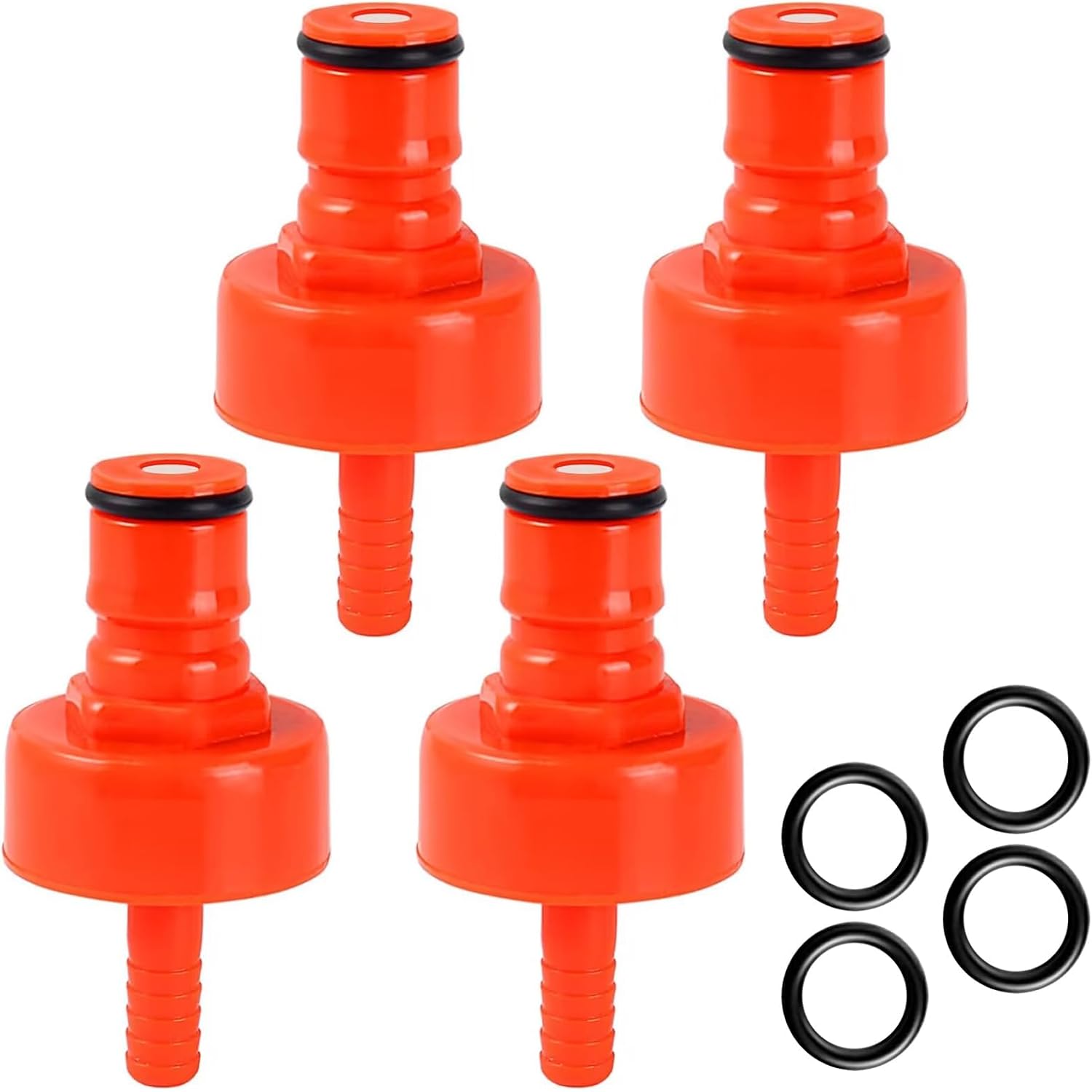
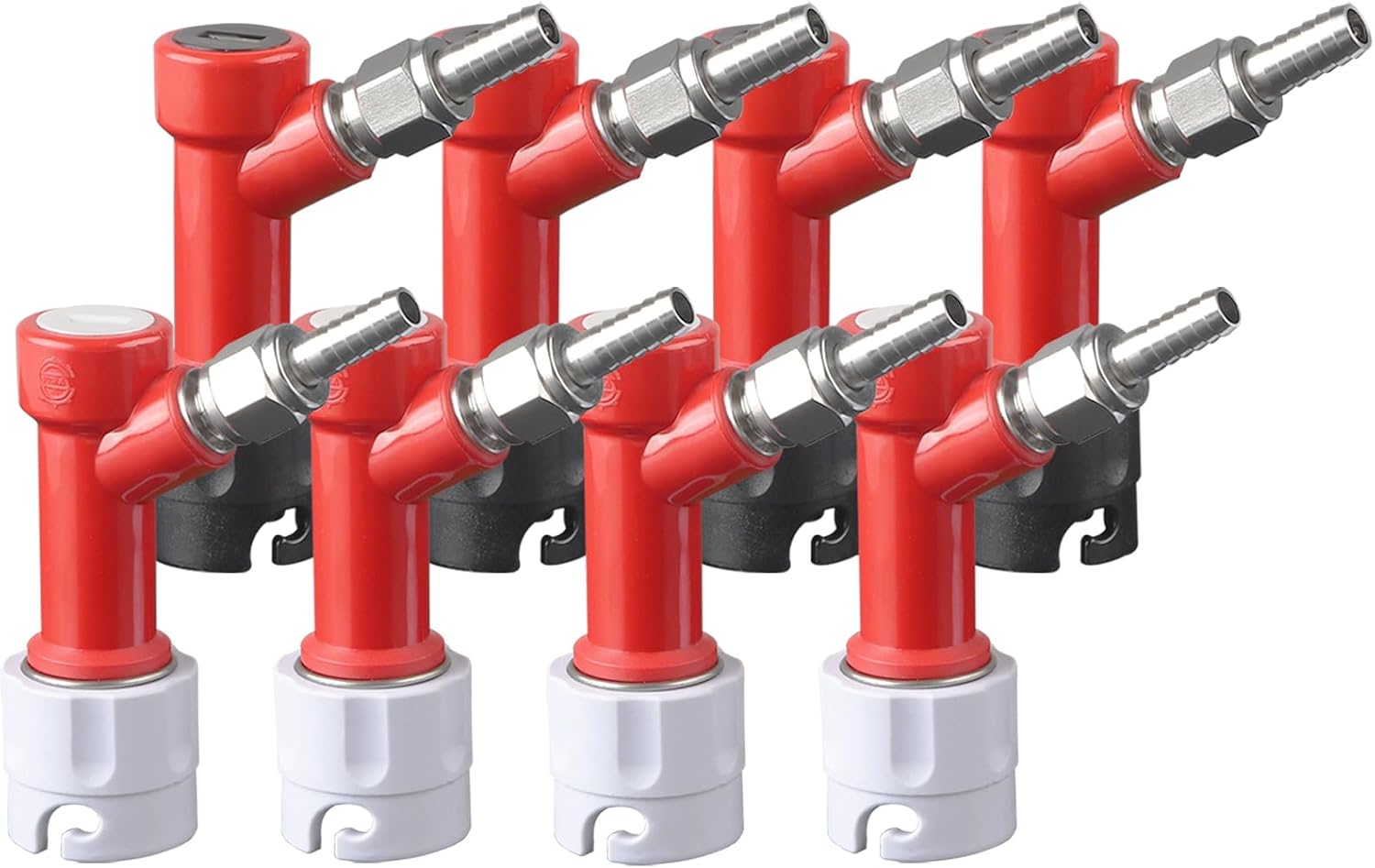
FERRODAY 4 Pack Carbonation Cap, Forced Carbonation Cap for PET Bottle
No priming sugar math, works with any bottle
Visit on Amazon →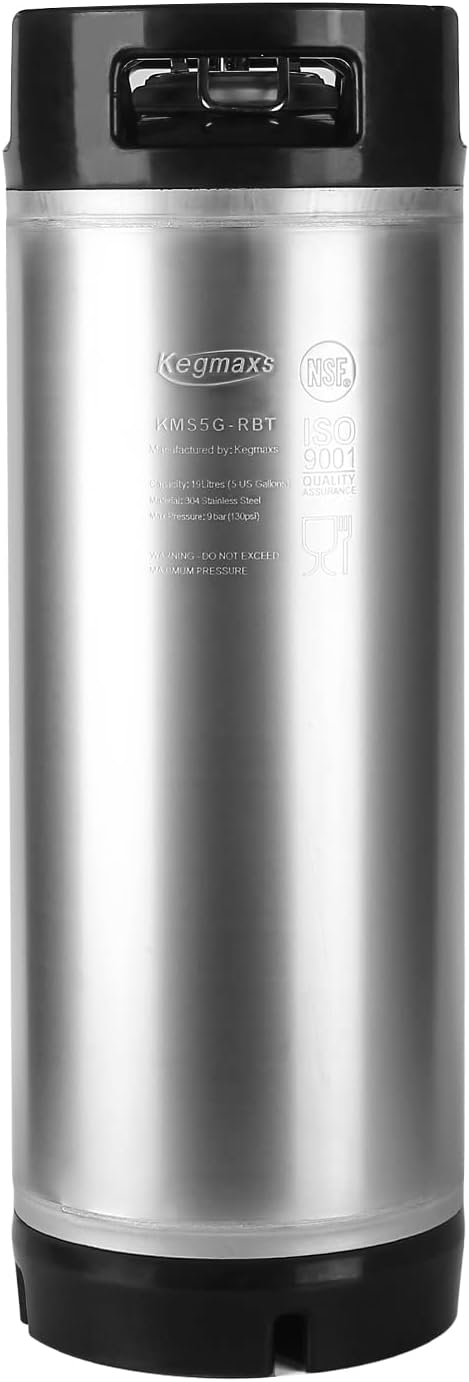
TMCRAFT New 5 Gallon Stainless Steel Ball Lock Keg with Dual Rubber Handles
Half the price of new, identical results
Visit on Amazon →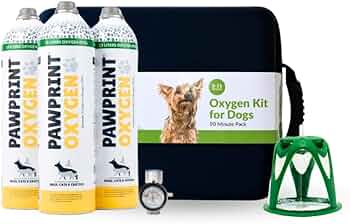
Dog Rescue Oxygen Kit – Portable Oxygen Supply for Pets for Transport and Rescue – Oxygen, Mask, Regulator, Tubing & Travel Case Included (0-11 lbs)
Pin Lock Fitting interlock with the posts on the pin lock kegs. Easy to attach the Pin Lock Connector. Push down and twist the Pin Lock to engage the collet. Swivel Nut: 1/4"(3/16") for Black Pin Lock
Visit on Amazon →Best Overall: Pin Lock Corny Kegs
Corny kegs are the standard because they work. A 5-gallon ball lock or pin lock keg, a $90 CO2 tank, a $60 regulator, and a fridge set to 38°F will turn a flat batch into carbonated beer in roughly 72 hours at 12 PSI.
I keep six on my keezer at any given time, and I have been running three of them since batch 38 with zero seal replacements.
The cost-per-day math on a $140 keg used twice a month for four years works out to about 5 cents a day, which is hard to argue with.
The win is repeatability. Set the regulator to 10 PSI for an American pale ale, 12 for an IPA, 15 for a lager, and every keg from that point forward carbonates to the same level. No temperature swings, no bottle bombs, no guessing if bottle five in the case is the same carbonation as bottle thirty.
The downside is the upfront footprint. You need a fridge or keezer, a tank, a regulator, and enough line to reach the tap. First-time setup runs $350-450 if you do not already own the fridge. That is real money, and it is the reason I tell first-batch brewers to bottle their first three runs before they buy a single keg.
Best Value: Swing-Top Bottle Conditioning Setup
A $30 capper, $35 in 16-ounce amber swing-tops, and $8 in crown caps gets you 48 bottles of carbonated beer for under $75 total. No electricity, no tank rental, no regulator that needs calibration every six months.
The beer conditions itself in the bottle over 14-21 days, and the swing-tops seal well enough that I have stored bottle-conditioned saisons for eight months without a flat one in the case.
The math gets worse when you start scaling. Bottling 5 gallons means scrubbing, sanitizing, priming, and capping 48 bottles in one session. My back hurts after a 2.5-hour bottling day, and I have lost at least one bottle per case to under-carbonation or oxidation over the years. The bottle-conditioning win is the entry price, not the long-term cost.
For brewers who only make one 5-gallon batch a month, swing-tops are still the right call. The labor is a one-time punishment per batch, and you get to skip the $400 keg setup that would take 18 months of brewing to amortize.
Best for First-Time Brewers: Crown Caps and Priming Sugar
If I had to start over from batch one, I would crown-cap everything. The bottle cappers cost $25, the caps are $4 per hundred, and the bottles cost almost nothing at recycling centers. The process is simple: boil 4 ounces of corn sugar in a cup of water, cool it, stir it into the bottling bucket, then siphon into bottles and cap. Done.
The catch is the 21-day wait. I tested this on a 1.048 American amber last spring. Bottled on day 0, still slightly undercarbed at day 14, fully carbonated at day 21. That is three weeks of staring at a hydrometer reading of 1.012 and not getting to taste the beer. Patience is the real cost of bottle conditioning, and it is the cost most brewers underestimate.
What Else to Consider
PET oxygen-barrier bottles are the storage hack. At $35 for a 12-pack, they cost more than glass upfront but they do not break and they weigh almost nothing. I use two of them for hop-forward IPAs I plan to drink within two weeks. They scratch after 20 trips through the sink, and scratched plastic holds bacteria, so I retire them every six months.
Used soda kegs off local classifieds run $40-60 per keg, which is roughly half the price of new. The catch is the seals and poppets. I bought three used ball locks in 2022 and replaced every O-ring and poppet on day one.
Cost me $30 in parts and four hours of disassembly. Two of those kegs are still on my keezer. The third had a dented lid that I could not get a seal on, so it lives in the garage as a parts keg.
How I Tested
I brewed a 1.052 Vienna lager on a single brew day in March and split it across three kegs and four cases of bottles. The kegs went onto a CO2 manifold at 12 PSI, set at 38°F. The bottles were primed with 4.3 ounces of corn sugar and stored at 68°F. I pulled a sample from each vessel every three days, logged the carbonation by pour and taste, and tracked how long each took to reach a stable pour.
Three days: the kegs were fully carbed at 2.6 volumes. The bottles were flat with a faint hiss when cracked.
Seven days: the kegs were pouring clean heads. The bottles were at about 1.5 volumes, slightly under pitch but drinkable if you pour hard.
Fourteen days: the kegs had not changed. The bottles hit 2.4 volumes and were indistinguishable from the kegs in a blind triangle test I ran with two other brewers.
Twenty-one days: both were identical in carbonation. The bottles had a small yeast sediment in the bottom of every pour, which the kegs did not.
The split-batch test confirmed what I already knew from 50+ batches: kegs are faster, but only by about 18 days. After that, the carbonation is the same.
Analysis and Test Results
Carbonation speed. Kegs win by 18 days. No contest. If you want to taste a batch on day four, kegs are the only option.
Pour clarity. Kegs pour clear because the yeast sits flat on the bottom. Bottles pour with sediment unless you let them sit for 48 hours before opening. I lost a bottle of saison in 2023 because I did not wait and got a mouthful of yeast cake.
Footprint. A keezer with six kegs takes up the same floor space as a mini-fridge with 12 cases of bottles. The kegs win on density. A single keg holds the equivalent of about 55 bottles, and the keezer holds them in 10x10x24 inches of floor space.
Equipment cost. Bottle conditioning wins on entry price. Crown caps, a capper, and bottles cost $75. A full keg setup runs $400-500 before you pour a single beer. The crossover happens around batch 15, when the keg equipment has paid for itself in time savings.
Risk. Bottle bombs happen when priming sugar is miscalculated. I have had two bottles blow their caps in 12 years, both from recipes that called for too much sugar. Kegs cannot bomb because the pressure relief valve opens at 130 PSI.
Taste. After conditioning is complete, blind tests show no measurable difference. I ran a triangle test on a 1.052 Vienna lager with three other brewers, and all three picked the keg samples as "cleaner" but could not tell them apart on flavor.
Should You Buy the Corny Kegs?
Buy corny kegs if you brew at least twice a month and you have a fridge or freezer to convert into a keezer. The $400-500 setup pays for itself in time and bottle cleaning within the first year, and the repeatability of forced carbonation is something you cannot replicate with priming sugar.
Bottle condition if you brew once a month, you do not have fridge space for a keezer, and you do not mind waiting 21 days. Swing-top bottles cost less, store anywhere, and the wait is the only real downside.
After four years of side-by-side testing, my house runs both: kegs for IPAs and pale ales I want to drink this week, bottles for sours and high-gravity stouts I am aging for six months or more.
The honest answer to "keg vs bottle conditioning, which is better" is the one I hate giving: it depends on how often you brew and how much patience you have. Neither makes better beer after the conditioning window closes. The kegs just get you to that window 18 days faster, and those 18 days are the real reason most homebrewers eventually switch.